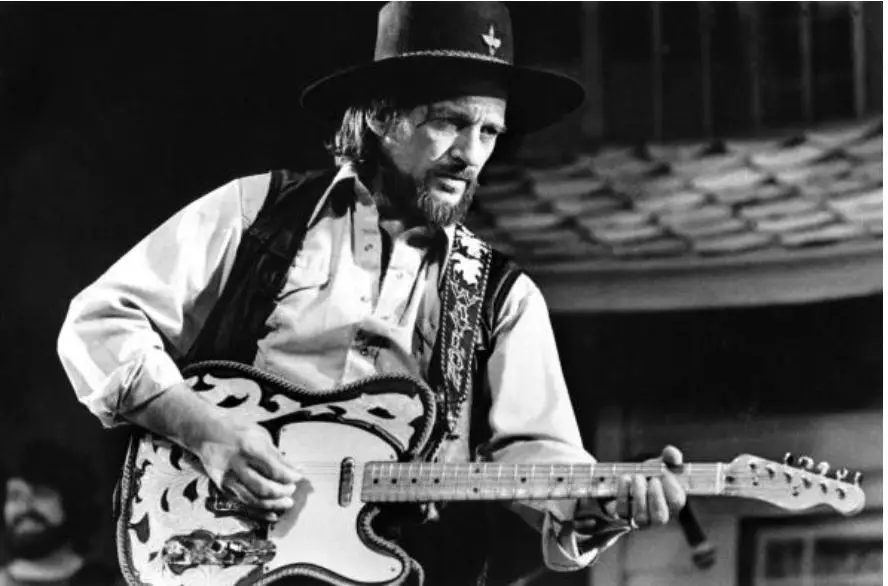
Introduction to Waylon Jennings and His Legacy
When we think of Waylon Jennings, the first image that often comes to mind is that of the rugged outlaw, the rebel who reshaped country music in the 1970s. His deep, resonant voice and unapologetic style set him apart from the polished Nashville sound, making him one of the central figures in the Outlaw Country movement. Yet, behind this hardened exterior, Jennings was also capable of delivering music that revealed profound vulnerability and humanity. One of the most striking examples of this is the song “Cloudy Days.”
Released in 1974 as part of the album The Ramblin’ Man, this song stands as a testament to Jennings’ ability to balance rebellion with raw introspection. Far from the high-octane honky-tonk anthems, Cloudy Days captures the spirit of weariness, longing, and the search for comfort during life’s most difficult moments.
The Origins of “Cloudy Days”
“Cloudy Days” was written by Richie Albright, Jennings’ longtime drummer, confidant, and close friend. At its core, the song reflects not just Albright’s words but also Jennings’ lived experiences and emotional struggles. Jennings dedicated the track to his mother, Lorene Jennings, whose words of comfort—“Don’t worry, son. Everybody has cloudy days.”—inspired the song’s lasting message.
For Jennings, who often lived under the weight of fame, touring, and the pressures of the music industry, these words became more than simple reassurance. They were a lifeline, a reminder that even in the darkest of times, hope persists. This personal connection is what makes Cloudy Days so compelling and timeless.
Musical Style and Composition
Unlike Jennings’ more energetic outlaw tracks, Cloudy Days is marked by simplicity and restraint. Its stripped-down instrumentation places the focus squarely on Jennings’ voice, which delivers the lyrics with honesty and quiet strength. His baritone—low, gravelly, and unmistakably human—resonates with a sense of fatigue, but also with resilience.
The arrangement is modest, with gentle guitar and subtle rhythm supporting the narrative. This understated approach emphasizes the song’s intimate theme, making listeners feel as though Jennings is sitting across the table, confiding in them directly. The choice to keep the song musically restrained demonstrates Jennings’ mastery of storytelling, proving that sometimes less is more when conveying deep emotion.
Video
Themes of Struggle and Vulnerability
At its heart, Cloudy Days speaks to the universal human experience of hardship. Life is full of challenges, disappointments, and losses that weigh heavily on the soul. Jennings doesn’t disguise these realities with false optimism. Instead, he acknowledges them with stark honesty, suggesting that strength is not found in pretending everything is fine but in admitting when one is struggling.
This theme of vulnerability was unusual within the Outlaw Country genre, which often celebrated defiance, independence, and masculine bravado. With Cloudy Days, Jennings subverted expectations, showing that even the toughest men encounter moments of doubt and despair. It was, and remains, a refreshing reminder that vulnerability is not weakness but courage.
The Song in the Context of Jennings’ Career
Released at a pivotal moment in Jennings’ career, The Ramblin’ Man album showcased the breadth of his artistry. While other tracks on the album leaned into his rebellious persona, Cloudy Days offered a softer counterpoint, allowing audiences to see another side of the outlaw legend.
This duality—rebellion and reflection—helped solidify Jennings’ reputation as one of the most versatile and authentic voices in country music. He could deliver rowdy anthems that rattled barrooms, but he could also bring listeners to tears with songs like Cloudy Days. This balance is part of why his music continues to resonate across generations.
Emotional Impact on Listeners
The power of Cloudy Days lies in its relatability. Whether a fan is navigating personal loss, facing professional setbacks, or simply enduring the ordinary struggles of life, the song speaks to them directly. Jennings’ voice, infused with genuine weariness, serves as both a mirror of their pain and a source of comfort.
The song’s refrain—that cloudy days are a part of everyone’s journey—reminds us that we are not alone in our struggles. For fans who idolized Jennings as the embodiment of strength and independence, hearing him reveal his own vulnerabilities made the message even more impactful.
Cultural and Historical Significance
In the larger context of country music history, Cloudy Days represents a departure from the traditional themes of honky-tonk revelry and Western bravado. Jennings’ willingness to present himself not as an indestructible figure but as a human being facing trials helped expand the emotional range of the genre.
The song also contributed to the Outlaw Country narrative by proving that rebellion wasn’t just about fighting the establishment—it was about rejecting artificiality altogether. By embracing truth, no matter how painful, Jennings embodied the outlaw ethos in its purest form.
Legacy of “Cloudy Days”
Today, Cloudy Days remains one of Jennings’ most cherished tracks, not because it topped charts or filled stadiums, but because it spoke to the soul. It is a song that listeners return to when they need reassurance, comfort, and understanding. Its legacy endures not in sales figures but in the quiet moments when someone plays it on a rainy evening, seeking solace in Jennings’ voice.
For newcomers to Jennings’ catalog, Cloudy Days is an essential entry point. It reveals that beneath the outlaw image was a man who understood pain as deeply as anyone else. For longtime fans, it serves as a reminder of why they fell in love with his music in the first place: because it was real, unfiltered, and profoundly human.
Conclusion
Waylon Jennings – Cloudy Days is far more than a song; it is a statement about resilience, vulnerability, and the shared human experience. Through its humble composition and heartfelt delivery, it captures the essence of Jennings not just as a performer but as a man. In embracing his cloudy days, Jennings gave his audience permission to embrace their own, reminding us that the strongest act is often the simplest—acknowledging that sometimes, we all need light to break through the clouds.