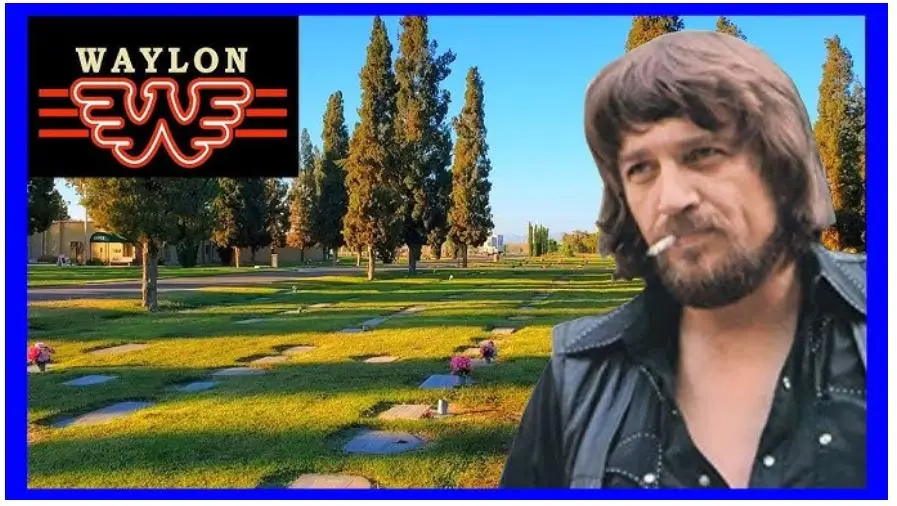
Waylon Jennings: A Legacy Etched in Stone
Under the wide expanse of the Arizona sky, the grave of Waylon Jennings stands as both a humble resting place and a monumental symbol of an era that redefined country music. Far from being just another grave in a cemetery, this site has become a destination for fans who seek not only to mourn but to celebrate the life of an outlaw country legend whose voice, guitar, and spirit reshaped the boundaries of music.
Jennings, known for his fearless independence and refusal to bend to industry rules, left behind more than just a catalog of timeless songs. He left behind a movement. Today, his grave in Mesa, Arizona is visited by admirers who feel the pull of history, drawn to honor a man who lived by his own code and gave country music a sound that was raw, honest, and unforgettable.
The Final Resting Place in Mesa, Arizona
Waylon Jennings was laid to rest at the Mesa City Cemetery, a peaceful site that reflects the quiet dignity of his later years. While his tombstone may not boast grandiosity, its understated presence carries the weight of his legend. Fans often remark on the simplicity of the grave marker, noting that it feels perfectly aligned with Jennings’ own spirit—authentic, unpretentious, and deeply grounded.
The cemetery itself has become something of a pilgrimage site, where admirers journey across states and even countries to stand before the grave. The act of visiting is less about mourning and more about connecting with the outlaw spirit Jennings embodied throughout his life.
Tokens of Respect and Fan Tributes
Visitors frequently leave guitar picks, handwritten notes, flowers, and personal mementos as a tribute to Jennings’ enduring impact. These tokens reflect the profound ways his music has touched lives—songs like “Luckenbach, Texas (Back to the Basics of Love),” “Good Hearted Woman,” and “Are You Sure Hank Done It This Way” remain etched in the collective memory of country fans worldwide.
These offerings turn the grave into a living shrine. Each item tells a story: a fan who found comfort in his lyrics, a musician inspired by his defiance, or a listener who found their own identity reflected in Jennings’ outlaw authenticity.
The Outlaw Country Movement and Jennings’ Role
To understand why Waylon Jennings’ grave holds such power, one must return to the 1970s when Jennings, alongside Willie Nelson, Johnny Cash, and Kris Kristofferson, helped forge the Outlaw Country movement. This rebellion against the polished constraints of Nashville’s establishment gave birth to a sound that was rugged, personal, and unapologetically real.
Jennings’ music carried grit. His songs were unfiltered expressions of life’s struggles and triumphs, delivered with a voice that was equal parts defiance and soul. His decision to wrestle creative control from record labels marked him as not just a performer, but a pioneer who shifted the balance of power in country music.
The Highwaymen Brotherhood
One cannot speak of Jennings without invoking The Highwaymen, the supergroup of Jennings, Willie Nelson, Johnny Cash, and Kris Kristofferson. Together, they created not only music but mythology. Their songs echoed with the weight of lived experience, capturing the essence of what it meant to be outlaws in both life and art.
At Jennings’ grave, fans often recall this brotherhood. It was more than collaboration; it was a meeting of spirits who carried the torch of authenticity and carved a place in history that remains untouchable.
A Place of Pilgrimage for Generations
For many, visiting Waylon Jennings’ grave is an act of paying respect to the outlaw ethos. It is about standing where others have stood, reflecting on the man whose music continues to inspire. The grave has become more than a marker—it is a focal point where the past and present collide.
Each visitor brings with them not only admiration but also a sense of belonging. Jennings’ grave embodies the spirit of inclusivity that his music conveyed, welcoming anyone who resonates with the honesty of his songs.
Waylon Jennings’ Enduring Influence
Even years after his passing in 2002, Jennings’ influence remains unshakable. Modern artists still cite him as a guiding light, and fans across the globe continue to find solace and empowerment in his lyrics. The outlaw country genre, shaped in large part by Jennings’ stubborn determination, continues to thrive, ensuring that his legacy is far from forgotten.
From the first chords of his career to his final resting place in Arizona, Waylon Jennings remains a symbol of courage, independence, and artistry. His grave is not merely where his body lies; it is a physical reminder of a man who stood tall against conformity and gave music a soul that cannot be silenced.
Conclusion: The Spirit Still Rides
Waylon Jennings’ grave is a place of quiet reverence and resounding significance. Beneath the Arizona soil rests a man who redefined the trajectory of country music, whose voice still echoes in honky-tonks, radios, and hearts around the world. For those who visit, it is not just about looking down at a stone, but about looking up—to the enduring legacy of a man whose outlaw spirit still rides through every note of country music.
His grave is a testament: legends never truly die. They live on in the songs we sing, the roads we travel, and the freedom we dare to claim. Waylon Jennings remains not only in the annals of music history but also in the living memory of every soul who dares to embrace the outlaw way.https://youtu.be/_5Rf7i29SIM