The Unstoppable Rise of Country Music in America
Country music has never been more powerful, more dominant, and more relevant than it is today. From stadiums overflowing with fans to record-breaking sales and streaming figures, country artists are shattering attendance records and proving their status as cultural icons. Yet, despite the undeniable evidence of its influence, the Super Bowl halftime show continues to ignore country music year after year. This glaring omission raises questions about representation, fairness, and the cultural disconnect between America’s most beloved sport and one of its most successful genres.
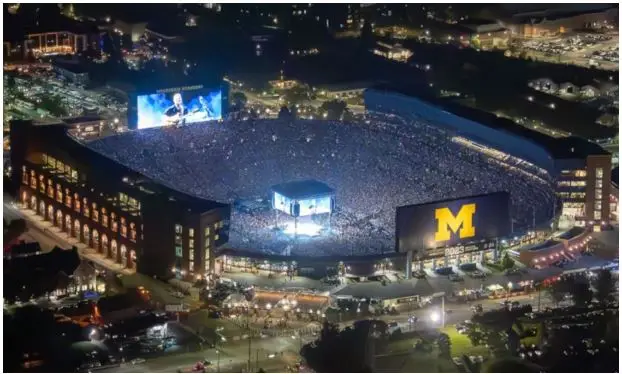
The recent performance milestones achieved by Zach Bryan, George Strait, Garth Brooks, and Morgan Wallen show how country continues to set standards for live entertainment. These aren’t small feats; they are monumental benchmarks in American music history. When more than 112,000 fans gather in a stadium for a single performance, surpassing decades-old records, it highlights not just popularity but also dominance. Country music is no longer a regional curiosity — it is a mainstream powerhouse.
Zach Bryan’s Record-Breaking Attendance
In a historic moment, Zach Bryan drew over 112,000 fans to a single stadium show, setting the all-time record for the largest ticketed concert in U.S. history. The sheer magnitude of this accomplishment demonstrates how country music resonates across generations, cities, and demographics. More than a concert, it was a cultural movement — a statement that country is not only alive but thriving on a massive scale.
Even more staggering was the merchandise revenue. Over $5 million in sales were recorded from that one night alone, an achievement that rivals entire tour numbers from artists in other genres. These numbers confirm what fans already know: country music isn’t just entertainment, it is a way of life deeply connected to its audience.
George Strait and the Legacy of Stadium Country
Before Zach Bryan’s monumental feat, George Strait held the attendance record with 110,905 fans. His career has consistently demonstrated how country’s appeal stretches across decades. Strait’s timeless catalog and reputation for filling arenas solidified him as the “King of Country.” His ability to attract fans on such a scale is proof that country music legends continue to command loyalty and admiration.
This legacy of country artists filling stadiums challenges the outdated perception that the genre belongs only to rural America. In truth, country has become a cornerstone of mainstream culture, with its stars ranking among the most bankable live performers worldwide.
Super Bowl Halftime Show’s 32-Year Country Music Snub
Despite this dominance, country music has been excluded from the Super Bowl halftime show for more than 32 years. Since Shania Twain’s partial performance in 2003, no country artist has been invited to headline the most-watched live television event in America. The NFL has leaned heavily toward pop, rock, and hip-hop, leaving millions of country fans unrepresented.
This omission feels especially jarring given that the NFL’s core fan base overlaps significantly with country music listeners. Both are rooted in tradition, family, and Americana values. When a stadium filled with football fans would gladly cheer for a George Strait or a Morgan Wallen halftime set, why does the NFL continue to look elsewhere? The disconnect between the fans’ preferences and the halftime entertainment choices is widening.
The Influence of Roc Nation and Industry Politics
One key reason for this exclusion is the NFL’s 2019 partnership with Jay-Z’s Roc Nation as its “Live Music Entertainment Strategists.” While the collaboration has produced high-profile performances from artists like Rihanna, Dr. Dre, and The Weeknd, it has also coincided with country music being entirely absent. The result is an unbalanced showcase where hip-hop and pop dominate the halftime stage while other genres are sidelined.
Critics argue that the NFL is prioritizing global image and cultural trends over the interests of its actual audience. The halftime show has transformed into a spectacle designed to appeal to international viewers and younger demographics, often at the expense of reflecting the tastes of American football fans. By neglecting country, the NFL risks alienating one of its most loyal fan bases.
Why Country Music Deserves a Super Bowl Spotlight
Country’s absence from the Super Bowl halftime stage is not just a matter of fairness; it is a matter of representation. With streaming platforms showing record-breaking numbers for Morgan Wallen, Luke Combs, Kacey Musgraves, and Chris Stapleton, the genre continues to dominate charts and award shows. At a time when country is experiencing global recognition, denying it a place on the Super Bowl stage sends the wrong message.
Imagine the cultural impact of a halftime show featuring George Strait alongside younger stars like Zach Bryan and Kacey Musgraves. It would not only showcase tradition and innovation side by side but also unite generations of fans in one of the most powerful musical statements in Super Bowl history. Such a performance would elevate the halftime show to new heights while honoring the very audience that makes the NFL possible.
The Cost of Ignoring Country Music
The refusal to embrace country music at the Super Bowl halftime is more than a snub — it’s a lost opportunity. The genre’s growing popularity, its ability to sell out stadiums, and its massive streaming success prove that country music is not only culturally relevant but commercially essential. By excluding country artists, the NFL is choosing to overlook one of the most profitable and loyal audiences in America.
Fans are no longer silent about this exclusion. Social media conversations and opinion pieces echo the same sentiment: it is time for the Super Bowl to embrace the genre that fills stadiums and defines American culture. Every year that passes without a country halftime show only deepens the frustration and fuels the demand.
Conclusion: The Case for Country Music at the Super Bowl
Country music’s record-setting achievements cannot be ignored any longer. From Zach Bryan’s historic attendance numbers to the enduring legacy of George Strait, the evidence is clear: this genre defines live music success in America. Yet, for over three decades, the Super Bowl has turned a blind eye.
As the NFL seeks to connect with audiences and strengthen its cultural relevance, it must finally give country music its rightful place on the halftime stage. Doing so would not only honor the sport’s most loyal fans but also create one of the most memorable halftime shows in history. Country music has already proven itself on every possible stage — now it is time for the Super Bowl to catch up.