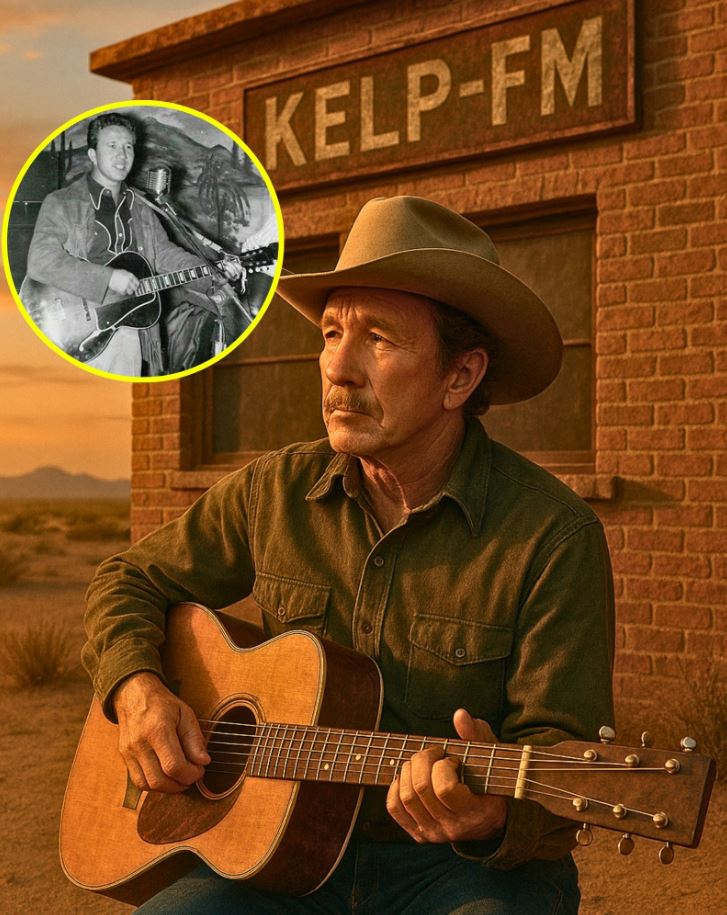
Unearthed Treasures: A Forgotten Radio Station Off Highway 80
In the arid expanse near El Paso, Texas, a forgotten radio station—its windows long boarded and walls sun-bleached—guarded a secret that had lain dormant for decades. Hidden behind decades of accumulated dust and abandoned engineering equipment, a retired audio engineer, Cal Jensen, stumbled upon a nondescript box labeled only with the initials “Marty R.” Inside, a reel-to-reel tape promised a journey into a side of Marty Robbins rarely seen by the public. This discovery has sent waves of excitement through the world of classic country music, offering a glimpse into a lost chapter of American musical history.
A Haunting Alternate Version of ‘El Paso City’
The tape, once carefully threaded through Jensen’s vintage reel-to-reel, revealed a version of ‘El Paso City’ markedly different from the one immortalized in 1976. The tempo was slower, the instrumentation sparse, and Robbins’ voice carried an intimate vulnerability that contrasts sharply with his signature polished studio recordings. Listeners can hear the soft creak of a chair, distant winds slipping through open doors, and the subtle hum of a desert night—elements that make this take feel eerily alive, as if the recording itself were a private conversation with the cowboy himself.
Mysterious Origins and Speculation
While some music historians suggest this could be an alternate 1976 studio session, others posit that it may have been recorded shortly before Robbins’ passing in 1982, capturing the artist in a profoundly reflective state. No known archives list this version, and it has never been formally released, making the recording a coveted artifact for collectors and fans alike. Robbins’ whispered remark, “If this is the last one… let it sound like home,” resonates as a haunting testament to the poetic closure he sought in his final recordings.
Legend and Cultural Impact
Word of the tape has already begun to circulate among die-hard fans and late-night radio enthusiasts, fueling myths that Robbins may have returned to the desert to complete a personal musical journey. The tape’s emergence has reignited interest in his broader catalog, prompting renewed appreciation for Robbins’ storytelling mastery and ability to imbue songs with emotional depth. Scholars and fans alike regard this recording as more than a mere alternate take—it is a window into the soul of an iconic country artist, revealing subtle nuances previously unheard in mainstream releases.
Preservation and Future Access
Efforts are underway to digitally preserve the recording, ensuring that future generations can experience the haunting tones of this unreleased masterpiece. Its existence reinforces the enduring legacy of Marty Robbins, highlighting his unique capacity to blend narrative and melody, and offering an extraordinary glimpse into a hidden dimension of American country music history.