A Moment That Defined Country Music Legacy
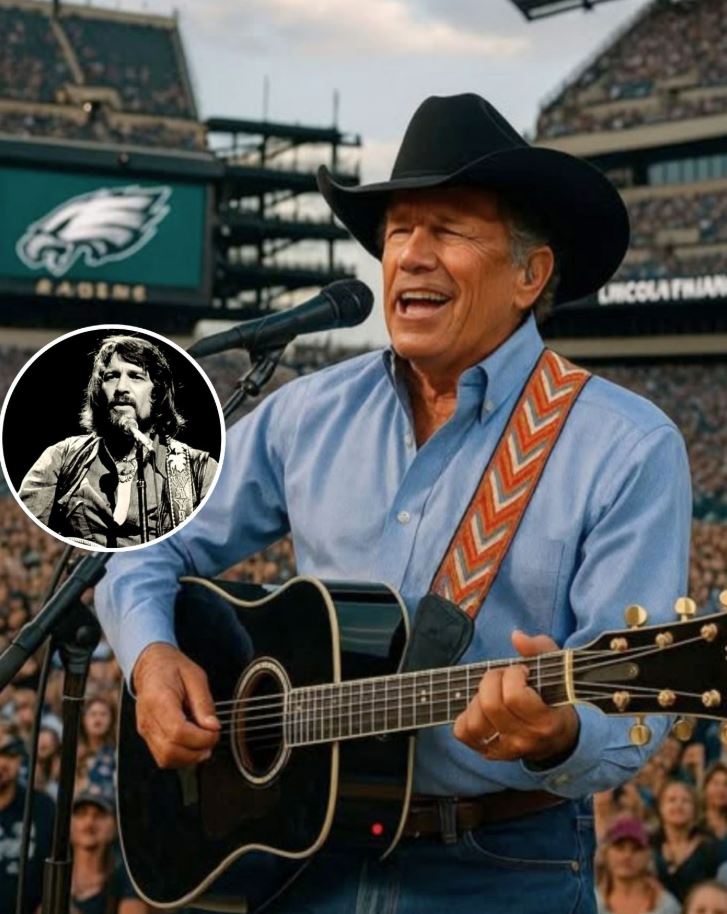
When George Strait stepped onto the stage to honor Waylon Jennings, the arena transformed into something far greater than a concert hall. Every detail—from the quiet strum of the first chord to the silence that wrapped itself around the crowd—spoke to the gravity of the occasion. This was not simply a performance. It was a final farewell, a conversation across generations, and an acknowledgment that the roots of country music are anchored in legends like Jennings. For those present, it felt as though time itself paused, allowing two icons to share a sacred moment.
Waylon Jennings: A Trailblazer Who Redefined Country Music
Before diving into the tribute itself, it is impossible to overlook the indelible mark Waylon Jennings left on the genre. Known as one of the pioneers of the outlaw country movement, Jennings pushed back against the polished Nashville sound of the 1970s. His deep, resonant voice, coupled with a fearless dedication to authenticity, gave rise to hits like “Are You Sure Hank Done It This Way” and “Good Hearted Woman.” These songs became anthems of rebellion, resonating with fans who yearned for honesty and grit in music.
Jennings was not merely a performer; he was a revolutionary. His ability to balance raw storytelling with powerful melodies paved the way for generations of artists. As George Strait himself later remarked, “Waylon wasn’t just a singer. He was a trailblazer. He gave all of us permission to be who we are.”
George Strait’s Deep Connection to Jennings’ Legacy
Few artists have embodied the tradition of country music as seamlessly as George Strait. Often called the “King of Country,” Strait built his career on staying true to the genre’s roots while bringing it to millions worldwide. It is precisely this dedication to authenticity that made his tribute to Jennings so profound. Strait understood that Waylon’s music was not only about melodies—it was about breaking chains, telling truths, and preserving identity.
This connection made Strait’s decision to honor Jennings not just appropriate but inevitable. In this moment, Strait wasn’t singing to an audience; he was speaking directly to Waylon’s memory, binding two legacies together.
The Tearful Final Tribute: ‘This One’s for You, Legend’
The tribute began quietly. Strait, with his trademark Stetson pulled low, stood at the microphone. The crowd hushed, sensing the magnitude of what was about to unfold. When he opened with lines from “Are You Sure Hank Done It This Way,” the recognition rippled through the arena like electricity. Each lyric carried weight, a deliberate reminder of Jennings’ defiant spirit.
As the song transitioned into “Good Hearted Woman,” emotions surged. Strait’s voice wavered—not from lack of control, but from the depth of what he was channeling. By weaving Jennings’ words into his own performance, Strait blurred the line between homage and resurrection. It was as if Waylon himself was present, his spirit guiding every note.
The climax arrived when Strait declared, “This one’s for you, Waylon.” The phrase was more than dedication; it was a final bow, a recognition that even legends fade, but their impact endures forever.
The Audience’s Emotional Response
The atmosphere inside the arena shifted dramatically. Fans who had come expecting entertainment instead found themselves part of history. Tears streamed down faces. Strangers embraced, united by a shared reverence for Jennings and admiration for Strait. Social media erupted with clips and testimonials, many describing it as the most emotional performance of Strait’s career. What made it unforgettable was not spectacle but sincerity—proof that true artistry lies in vulnerability.
Why This Tribute Resonates Beyond Music
What made the performance truly powerful was its resonance beyond the stage. Jennings represented rebellion, freedom, and the courage to challenge norms. Strait, known for his steadfast commitment to tradition, represented stability and continuity. Their convergence symbolized something larger than individual artistry: it symbolized the enduring spirit of country music itself.
This tribute also underscored a vital truth about cultural memory. While records and charts may fade, moments of raw human connection remain etched into history. Strait’s words and performance ensured that Waylon Jennings’ influence would continue to inspire not just musicians, but anyone who values authenticity.
Legends Never Die: The Lasting Impact of Jennings and Strait
As the evening drew to a close, one thing was clear: this tribute was not a curtain call but a bridge. Waylon Jennings’ fearless artistry continues to shape the genre, and George Strait’s homage cemented his role as the custodian of that legacy. Together, their stories remind us that legends may leave this world, but their music ensures they are never truly gone.
From the silent reverence of the crowd to the trembling sincerity in Strait’s voice, this tribute will be remembered as one of the most poignant events in modern country history. It wasn’t just about one man honoring another; it was about a tradition being carried forward, one heartfelt note at a time.
George Strait’s emotional farewell to Waylon Jennings stands as proof that music is more than entertainment—it is memory, emotion, and immortality. For every fan who was there and every listener who discovers the moment later, the message remains the same: “This one’s for you, legend.”